Joshua AllenTalbott
I lead technology for a Kent State college of 21+ departments. Along the way I’ve built AI tools people can trust, helped bring a Florentine sculpture to Ellis Island, invented products and filed my own patents, shipped apps, kept a live TV station on the air, and taught seven university courses.

- Role
- Director of Technology, College of Sciences and Humanities, Kent State University
- Scope
- 21+ departments across 19+ buildings; research computing and HPC
- Kent State
- More than twenty years; director since 2022
- Degree
- Master of Technology, Kent State University
All work LinkedIn (opens in a new tab) GitHub (opens in a new tab)
Leadership
Ten years leading IT for Kent State’s College of Sciences and Humanities, the full span of the sciences and humanities. Director of Technology since 2022.
-
One front door for support
Replaced a dozen private inboxes with one intake funnel in FreshService, routed by zone (West, Center, East, and Math & CS), so a small department gets the same care as a large one. The college later reorganized its administration around the zone approach.
-
Research computing
The college’s interface for high-performance computing: on-premises clusters, Open OnDemand, and connections to the Ohio Supercomputer Center for classes and researchers, through the university’s rise to R1.
-
Infrastructure
Rebuilt inherited systems into a hub-and-spoke environment across Azure, AWS, and on-premises data centers, covering virtual desktops, research storage, and endpoint security.
-
Regulated research
Support survey research labs under HIPAA controls and advise researchers on federal security requirements, such as NIST SP 800-171 self-assessments for Department of Defense awards and NIH attestations.
-
People
Supervise the team leader and two IT support experts, and run a four-tier student analyst program that takes students from any major to lead roles. Plenty of technology careers started here.
AI
I run AI on university hardware and design tools where the model interprets what someone wants and auditable code produces the answer.
-
A university-hosted AI platform
Open-weight models from Qwen and NVIDIA served with vLLM on NVIDIA Grace Blackwell hardware, behind Open WebUI with retrieval, private search, notebooks, and image generation. About six colleagues use it, and a cloud engineer runs his own workloads on it.
-
Guardrails by design
Data Lens turns plain-language questions into charts. When testing caught the model inventing a table, I redesigned it so the model can’t state any number it didn’t retrieve from a real query.
-
Built with the people who use it
Colleagues bring problems to see whether AI can help. Earmark, a project tracker, was built with an audiovisual engineer. Lens and Notebook Lens put live web data and research notebooks in front of people who don’t write code.
-
Computer vision for research and teaching
A bird-species detector running on a Cornell Lab live stream, built with a birding expert from eBird and iNaturalist data, with human review so students verify AI guesses rather than rubber-stamp them.
-
Transpose
Paste any passage and read it at six vocabulary levels, side by side. The same meaning, adjusted for the reader.
-
An open guide to a private AI stack
A ten-step field guide to running chat, images, agents, code execution, and search on one machine, with no data leaving the box. The configuration is open source.
Read the Zero to Hero AI stack guide View the Self-hosted AI Stack repository (opens in a new tab)
Libertas
Pio Fedi’s Liberty of Poetry (1883) could not leave Florence’s Basilica of Santa Croce, so she traveled as data. Kent State rebuilt her at 80% scale for Sisters in Liberty at the Ellis Island National Museum of Immigration, 2019–2020.
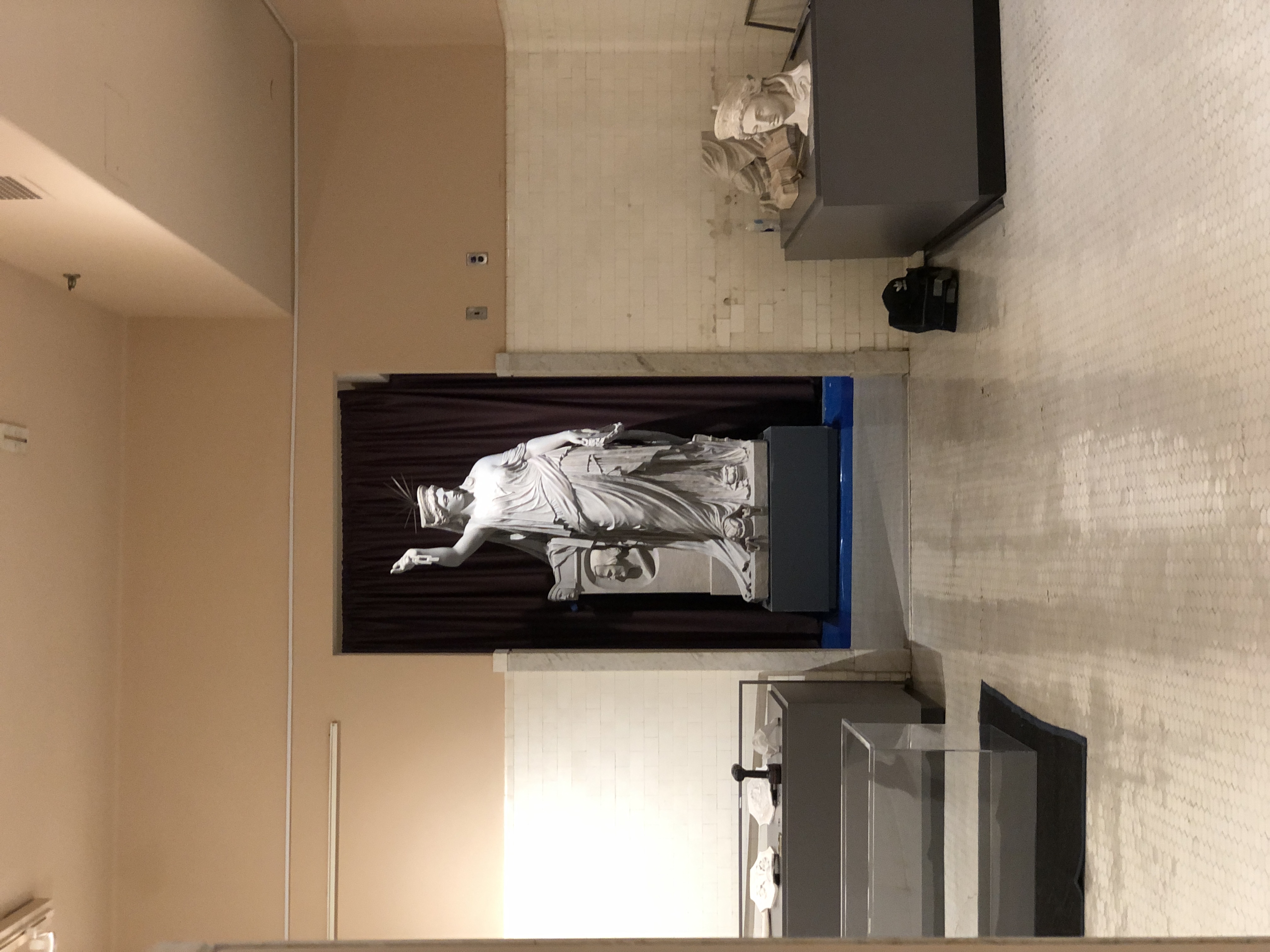
My part was the path from marble to object:
- Led the 3D capture in Florence: more than 100 passes with a structured-light scanner on a monopod
- Aligned the scans into one mesh and rebuilt the crown’s rays in Fusion 360
- Ran the sightline, scale, and weight studies that set her at 80% and kept her within the museum floor’s load limit
- Evaluated every manufacturing method before we chose binder-jetted sand
- Built the project website and supported the poetry kiosks
It was a collaborative effort across architecture, engineering, the physics shop, student fabricators, a Youngstown print house, the Wick Poetry Center, and the National Park Service. The full account credits everyone by name.
Read the full Libertas account Kent State Magazine (opens in a new tab) Forbes (opens in a new tab)
- Original
- Pio Fedi, Liberty of Poetry, 1883, Santa Croce, Florence
- Capture
- 100+ structured-light scans on site
- Scale
- 80%, printed in three sections
- Body
- Binder-jetted sand, painted to read as marble
- Crown
- Cast aluminum, painted to read as bronze
- Shown
- Ellis Island, 2019–2020; nominated for Best International Exhibit
Ventures
I start companies to learn how products, brands, and intellectual property actually work, then do that work myself.
TuTTi Bar™
A handlebar mount for a Bluetooth speaker, born from the fact that nobody made a good one. I designed and 3D-printed the prototypes, tested them on real rides, built the brand, and wrote and filed the patent and trademark applications myself, drafting them with AI. It’s on the shelf at a local bike shop.
Drag to turn the model.
VUEMesh Founder and CTO, 2014–2018
Automatic editing across many camera feeds, conceived around 2011, years before AI tools made it easy. I built the proof of concept and the app, filed a utility patent, and pitched it to venture capitalists and to GoPro.
Duh Industries
The umbrella for experiments that don’t fit a job description, where hardware, software, sound, and story get to collide.
duhindustries.com (opens in a new tab) duh.live (opens in a new tab) duh.video (opens in a new tab)
Apps
From native iPad apps to browser tools that need no account, no install, and no subscription. Each one started with a problem I actually had.
Learning
- Energetic Alpha (opens in a new tab)
Teaches kids to trace their letters. Written in Objective-C for iPad, released 2018.
- Energetic Numbers (opens in a new tab) and Cosmic Cursive (opens in a new tab)
Unity apps for the same studio. I ran quality control, builds, and publishing to iOS and Android.
- Piano Tutor
Notes fall toward a keyboard sized to your piano and wait until you play the right one.
- Voice Tutor
Traces your pitch in real time against the notes as you sing.
- Guitar Tuner
Hears which string you’re on and shows your pitch as a line. No ads.
Data and media
- Optical Data Bridge
Moves files between devices with animated QR codes. Open source (opens in a new tab).
- Hardcopy
Prints any file as QR pages that a camera can read back years later.
- Rise Vision Livestreams
A multi-layout livestream hub built for Kent State’s digital signage.
- Polysense
A first-person WebGL portfolio you move through, realm by realm.
The music apps came from practice: I’m a guitarist and keep my voice in training.
Broadcast
Before IT, I spent the better part of a decade keeping Kent State student television on the air, where nothing gets a second take.
-
An all-digital HD newsroom 2007–2013
Joined Franklin Hall’s new studio during commissioning, then ran it: three to five shows a day, a nightly county newscast, and live election coverage. I automated the control room with Python and AppleScript so a student crew could run it.
-
TV2, Station of the Year
TV2 won the College Media Association’s Pinnacle for TV Station of the Year in 2012 and 2013, my final two years there. The trophies belong to the students; the room they came out of is the part I built.
-
Master control for campus sports
Spearheaded fiber between Franklin Hall and the MAC Center with Teleproductions, turning a student control room into master control for live sports.
-
Live sports and events 2009–2014
Replay, technical direction, camera shading, graphics, and audio for college football and basketball across the Midwest, some of it on ESPN3.
Teaching
Seven courses across journalism, film, manufacturing, and emerging media. The method never changed: put the tool in someone’s hands and stay until they’ve made something real.
Videography Basics I and II
School of Journalism and Mass Communication
Avid Media Composer certification
Taught as an Avid Certified Instructor
Cinema editing
Co-taught with Dave Smeltzer; the class cut a student feature film to a premiere
Web Programming for Multimedia Journalism
Co-taught with Jacqueline Marino; Python and Django for data-driven storytelling
Computer-Aided Manufacturing
College of Aeronautics and Engineering; from G-code in the simulator to industrial mills
Creative Coding
School of Emerging Media and Technology; co-taught with Ava Aviva Avnisan, online and in a projection space I built
Path
Working since thirteen, in restaurant kitchens first, then vocational electronics in high school. Kent State has been the constant since. Lighter entries ran alongside the main job.
- 2022–nowDirector of TechnologyKent State University, College of Sciences and Humanities (formerly Arts and Sciences)
- 2017–2019DeveloperStudio51VFX
- 2016–2022Team Leader, ITKent State University, College of Arts and Sciences
- 2016–2018iOS developerLucy Jr
- 2014–2018Founder and CTOVUEMesh
- 2013–2016Lead IT User Support AnalystKent State University, College of Communication and Information
- 2011–2022Adjunct facultyJournalism, Aeronautics and Engineering, and Emerging Media and Technology
- 2009–2014Freelance broadcast engineerPrism Video Group
- 2007–2013Senior Media SpecialistKent State University, School of Journalism and Mass Communication
- 2005–2007Senior Electronics TechnicianKent State University, Education Technology and Distance Learning
- 2005–2007Electronics TechnicianAlphaMicron, circuits for liquid-crystal eyewear
- 2002–2005Student broadcast engineerKent State Teleproductions and student media
Education
- Master of Technology, Manufacturing and Management, Kent State University, 2012
- Bachelor’s degree in Technology, cum laude, Kent State University, 2007
- Associate degree in Technology, Kent State University, 2005
Credentials
- ITIL Foundation, IT Service Management
- Avid Certified Instructor
- FCC amateur radio license, KC8ZZF
Open work
Ideas published to teach and to provoke, not to pitch.
Distributed rapid initial attack for wildfires
Detection is largely solved; the response layer isn’t. This open concept stages autonomous suppression aircraft at regional airports and launches them the moment an ignition is verified, with Ohio as the proof of concept. The concept paper makes the case, and the First Strike simulator lets you run it.
Read the concept paper (PDF) Run the First Strike simulator
Independent work offered in a personal capacity, not a proposal from or endorsement by any employer or agency. Simulator figures are illustrative and meant for teaching.
Contact
I’ve always been less interested in technology itself than in what people can create with it. Josh Talbott
- Connect on LinkedIn (opens in a new tab)
- Browse all work
- GitHub (opens in a new tab)
- YouTube (opens in a new tab)
- Instagram (opens in a new tab)
- TikTok (opens in a new tab)